
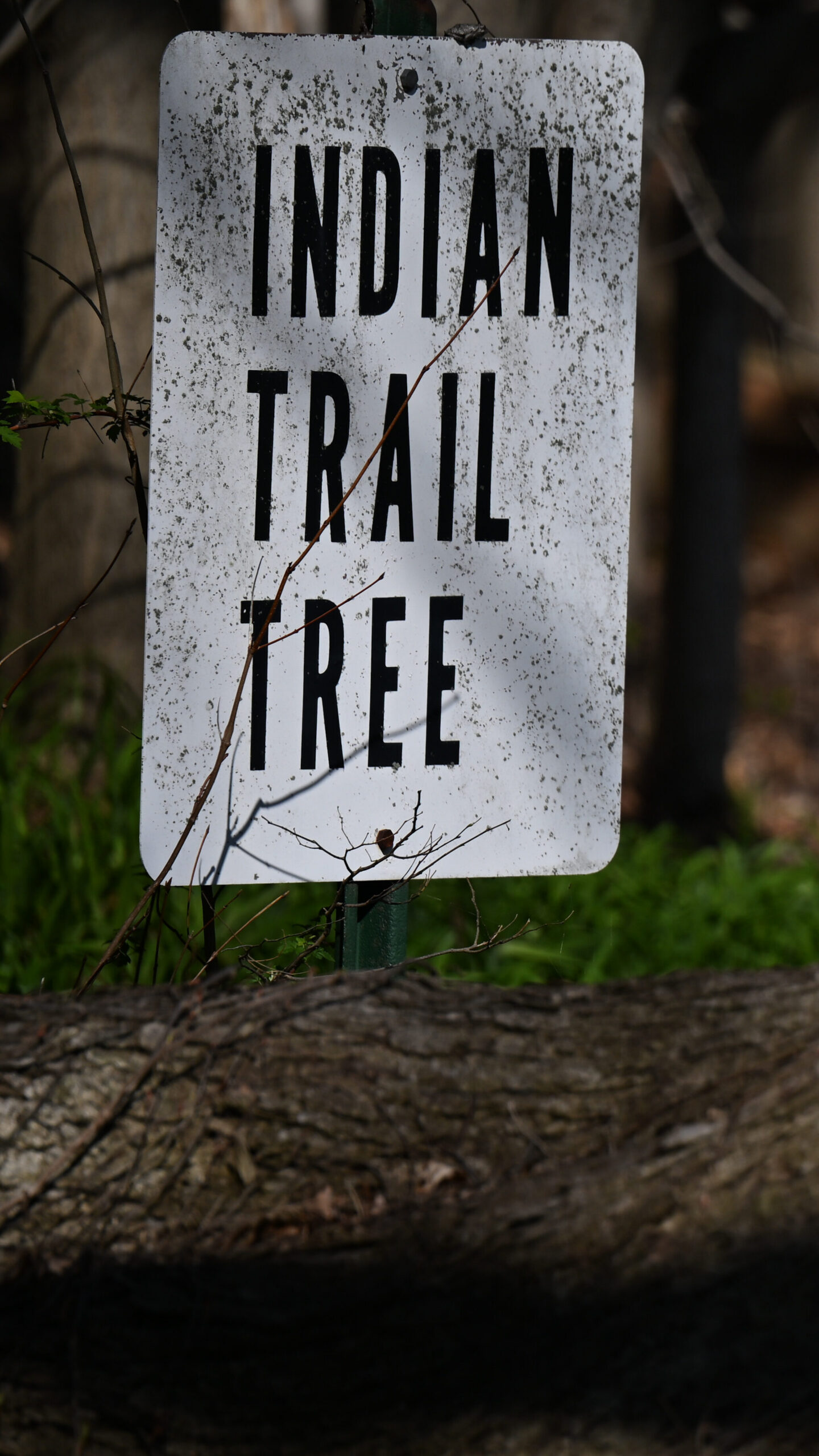
If you look closely at the field across from the North Oak Grove Cemetery in Coldwater, Michigan, you may notice an unusually-positioned tree, tall with age, bent at a unique angle, and nearly uprooted due to a particularly damaging ice storm in 2023. Perhaps inconspicuous other than its interesting growth pattern, this tree is marked with a white sign that reads “Indian Trail Tree,” denoting it as significant due to its being situated on a trail traveled by Ancestors and animal relatives since time immemorial.
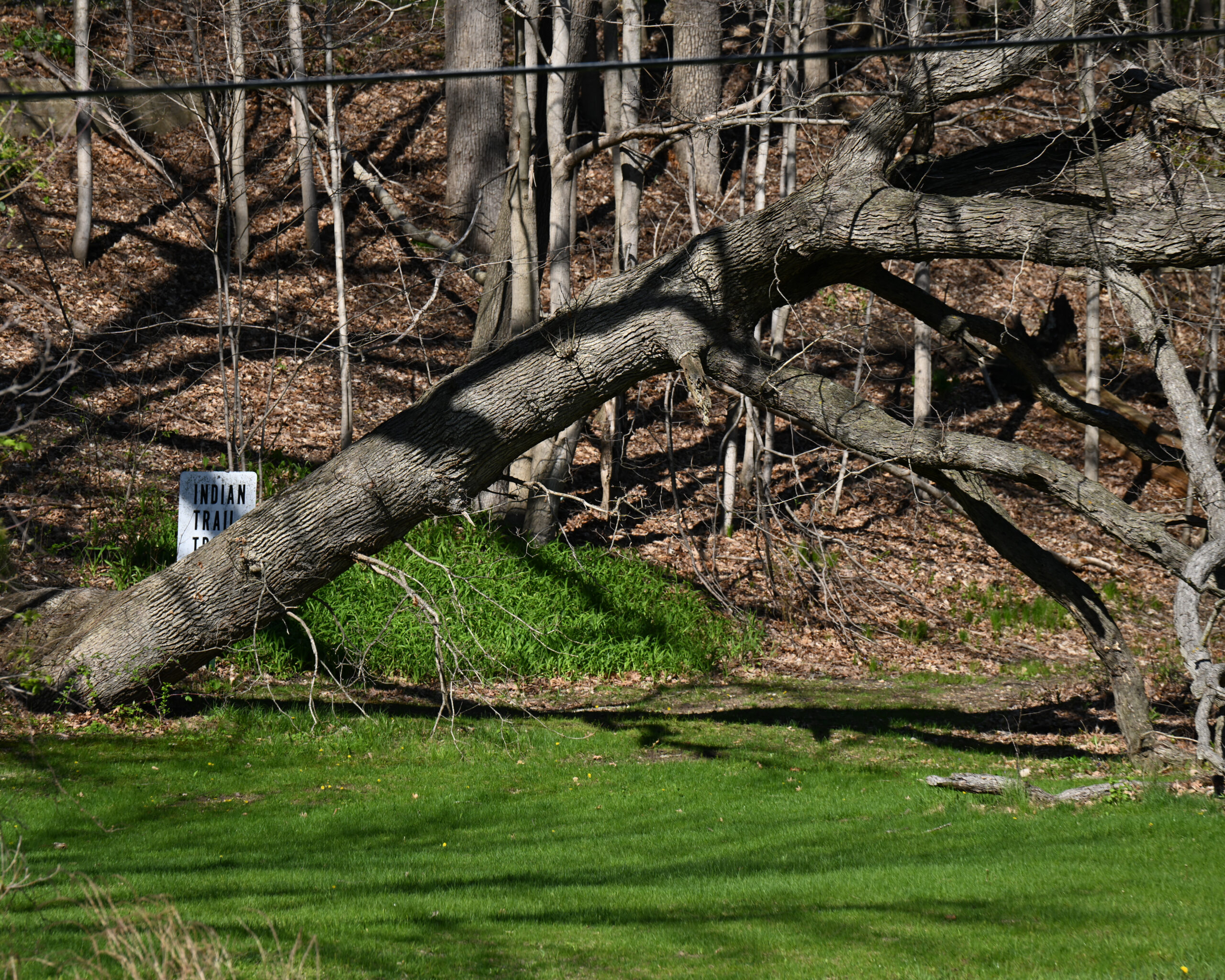
The trail, also designated as the “Old Sauk Trail,” was carved out by a glacier melt and once traveled by mastodons and caribou of the Ice Age who migrated through the region. Many years later, over the course of what NHBP Tribal Historic Preservation Officer Onyleen Zapata estimates to be “about 250 to 300 years,” the Trail Marker Tree began to grow in the place where it can be seen today.
In more recent centuries, this tree was used as a means of navigation for many different people. The Sauk peoples first utilized this path in moving from Minnesota to the greater Detroit area, followed by local Potawatomi following the trail west to the St. Joseph watershed and the Chicago area, and later settlers would establish a trading post close by. Though in the present day it is not relied upon for navigation in our current world of major highways and GPS, the tree is still considered to be a historic landmark for both local Indigenous peoples and residents of Coldwater alike.
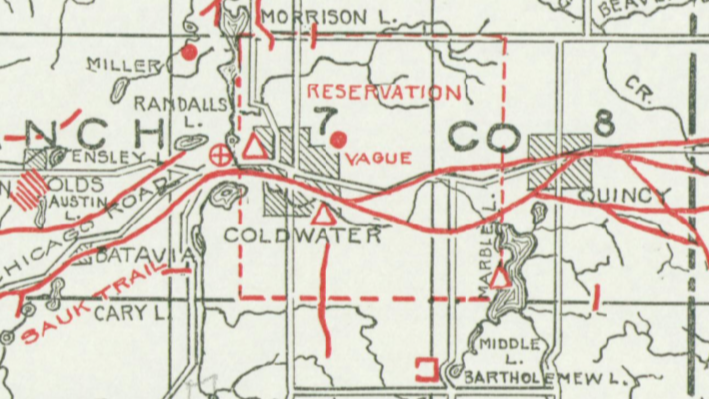
The impact of Native peoples on the Coldwater area is seen beyond the presence of the Indian Trail Tree. Even the city’s name is said to have come from the Bodwéwadmimwen word “Ksenyambish,” meaning “cold water.” According to Wilbert B. Hinsdale’s Archaeological Atlas of Michigan from 1931, the “Mickkesawbe Reservation” encompassed much of the town of Coldwater and was home to at least two Potawatomi encampments. Having witnessed the lives of both nomadic and domestic Ancestors who have since walked on, the Indian Trail Tree still stands within this historical area as a reminder of the lives led by those who came before us.
The storied past of the Indian Trail Tree, however, was recently endangered. There was a significant possibility of losing this piece of history back in February of 2023, when it became so laden with ice that the tree was violently uprooted from where it grew. A large part of the root system is still visible above the ground, and the tree has remained on its side since the storm three years ago.
As unfavorable as this diagnosis may seem, NHBP and the city of Coldwater have determined that uprighting and possibly even salvaging the tree is possible, and certainly worth pursuing for the sake of preserving Native history. NHBP’s Department of Public Works proposes a plan that involves propping up the tree via bolts and removing dead limbs, allowing the tree to continue both growing and thriving in its current location. Additionally, a Conservation Easement Agreement, which is a state contract that aims to protect Michigan’s wetland regions, was signed by both NHBP and the city of Coldwater on March 9, 2026.
With this collaboration now in progress, we can rest assured that this significant marker that holds histories of traveling Ancestors who may have interacted with it, will be safely protected for many years to come.



0 Comments