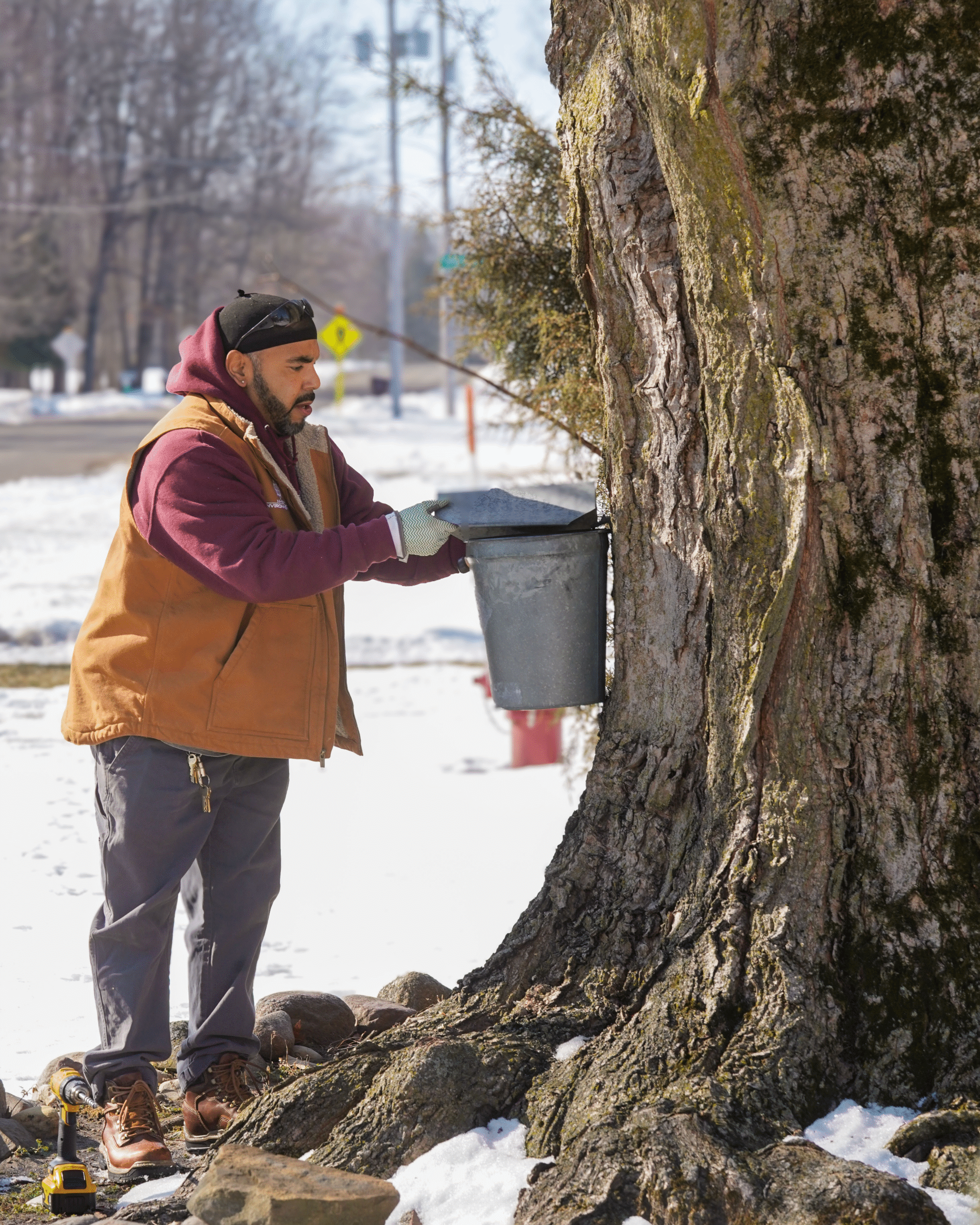
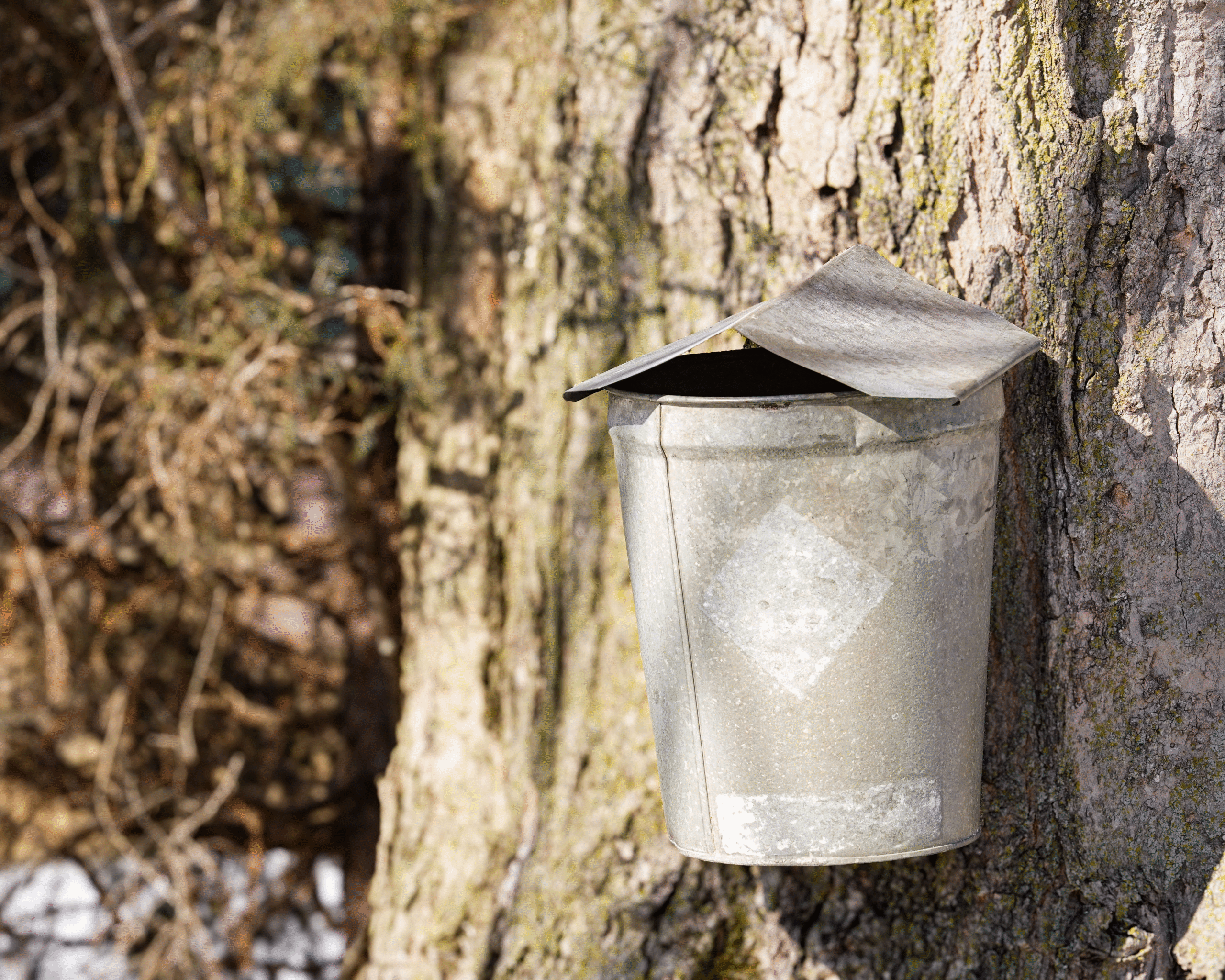
If you’ve recently driven through The Pine Creek Indian Reservation, you may have noticed a sudden appearance of bright blue bags and various buckets attached to the sides of specific trees. Last Friday, February 18, 2026, was The Blessing of the Maples, a tradition passed on from generation to generation that is now annually observed by the Nottawaseppi Huron Band of the Potawatomi. This yearly event began the harvest of the sweet sap that will become Zisbakwet {Maple Syrup}, after the buckets have been filled and the sap has been processed.
While we wait for the ground to keep thawing and the buckets to keep filling, Culture Specialist Kevin Harris II answered some questions about the story and significance of The Blessing of the Maples. Read more in the interview below:
What does the process of The Blessing of the Maples and tapping of the Grandfather Maple Tree look like?
The Grandfather Maple Tree is one of the maple trees that marks one of the original Day family’s properties. Sitting today next to Health and Human Services and the road, it has become a tradition to tap that tree first. When we honor the Maple Tree, it allows our people to show appreciation to the tree, because one day the syrup could no longer be here if we do not appreciate the gift if gives. Offering Séma {Tobacco} and saying “Migwetch” means a lot to the Maple Tree. What we are asking for is a successful harvest, and we are being appreciative to even have the leisure of this medicine. After the tapping of the tree, the community will tap more than 200 more trees. Once the buckets are full, they will then collect and transport the maple water to the Sugar Shack. The Sugar Shack is a professional maple syrup kitchen that produces gallons of syrup that we store to cook with, host events, and gift bottles to the Elders. This Rez syrup is like gold to us. It is a small stock, but its impact is very big on our community.

Has the Blessing of the Maples always looked like it does today, or have there been multiple/different approaches over the years?
Over the years The Blessing of the Maples has been facilitated by the Environmental Department. Led by the Culture Department for the last nine years, this event was created by the Environmental Department in collaboration with community members. The event opens up with a Pipe Ceremony, Singing, and an Invocation given as Tribal Elders tap the Grandfather Maple Tree. Community members enjoy the sound of the first drip in galvanized buckets around The Rez. After collecting, the maple water is transferred to a cooking shack, and then boiled into syrup.
Is there a date set for it to occur every year? Is there specific reasoning, cultural or environmental, in choosing this time of year?
Traditionally the date for the first harvest is when the temperatures reach above freezing, usually in the month of February after a long winter, as the maple trees are in hibernation mode. The water stored in the tree has a high sugar content when the leaves have fallen. After February, the trees start to use photosynthesis and the sugar content to produce leaves as Spring approaches, meaning the water from the maple is no longer able to be boiled into syrup. You have about week and half once the first tapping has occurred before the sugar content becomes faint and the water stops running out the taps.
Who passed down this cultural teaching to you? Who are the participants and Tribal Members involved in the process today?
The traditional teachings of the maple tree were taught to me while in ceremony and speaking with Elders. The story comes from the Anishinabé creation stories.
Everything on this earth has a purpose to serve as food or medicine for us. The Maple Tree is essential, serving not only as a vital food source but also as a cultural guide that teaches our people the value of hard work and earning what we receive. The teaching of the Maple Tree from our creation story, in summary, states that the Maple Tree once dripped syrup and Nanabush saw the people taking advantage of this leisure. The people were literally laying on their back allowing the syrup to fall right in their mouths. They became lazy, sick, and fought over the syrup. Nanabush felt the people didn’t deserve the syrup anymore but saw a lesson to be taught, and then filled a birch bark basket with water and poured the water into the top of the tree. Soon the syrup became diluted and turned into water. Nanabush gave the people the teaching of how to cook the water for it to become syrup again, but from now on the people had to work for it and earn syrup the hard way. The maple syrup was then not just a sweet syrup, it was actually medicine for the people and preserved their food for the winter months.
The story of Nanabush reminds us to be thankful and honor Mother Earth and her gifts. This lesson of taking what you need and not what you want reminds us to be appreciative of what the Creator has given you. It is very important that Tribal Members learn their teaching and creation stories. These stories are not just a folklore – they are a way of keeping our ways alive.
0 Comments